





Bently 3500/44M 140734-03 03S is a high-performance four channel vibration monitoring module in the Bently Nevada 3500 series mechanical protection system, designed specifically for Aeroderived Gas Turbines. This module is capable of continuous and real-time vibration monitoring of critical rotating equipment.
_副本.jpg)
_副本.jpg)
There are still some products that have not been listed yet. For more information, please contact us. If the product model does not match the displayed picture, the actual model shall prevail. Please consult us for specific product images; We will arrange for the warehouse to take photos for confirmation. We have 76 shared warehouses worldwide, so it may take several hours to accurately respond to your message. We deeply apologize for any inconvenience caused to you. Of course, we will process your inquiry as soon as possible.
Bently 3500/44M 140734-03 03S is a high-performance four channel vibration monitoring module in the Bently Nevada 3500 series mechanical protection system, designed specifically for Aeroderived Gas Turbines. This module is capable of continuous and real-time vibration monitoring of critical rotating equipment. Through precise signal processing and logical judgment, it drives alarm or trip relays when abnormal vibration levels are detected, thereby preventing expensive equipment damage and unplanned shutdowns. This module fully complies with the American Petroleum Institute API 670 standard and is a key defense line to ensure the safe operation of high-value assets.
The design of Bently 3500/44M 140734-03 03S fully considers the special monitoring requirements of aircraft to gas engines, supports multiple sensor inputs, including accelerometers and velocity sensors, and can be connected to interface units through dedicated I/O modules. This monitor is equipped with powerful digital signal processing capabilities, supporting advanced functions such as signal integration, 1X vibration tracking, and bandpass filtering, which can accurately extract vibration components synchronized with machine speed.
The module supports two independent Keyphasor key signal inputs, allowing different tracking filters to be used for each pair of channels. Each channel can be configured with up to 8 sets of alarm parameters (including Alert and Danger settings and delays), and can automatically switch according to different operating modes of the machine. Whether used for General Electric's LM series, Rolls Royce's RB211, or Pratt&Whitney's FT series gas turbines, this module provides excellent monitoring accuracy and reliability.
_副本.jpg "3500/44M 140734-03 03S")
Bently 3500/44M 140734-03 03S is mainly used for aviation derived gas turbine drive systems in the oil, gas, and power industries:
Offshore drilling platforms and onshore gas gathering stations: used to monitor gas turbines that drive compressors and generators, such as GE LM2500 or LM6000 gas turbines, responsible for monitoring bearing vibrations in the compressor and turbine sections to ensure safe operation of equipment in harsh outdoor environments
In the field of mechanical drive, such as gas turbine driven pump sets for pipeline transportation, critical overspeed and vibration protection is provided, which can capture early vibration abnormalities caused by blade wear, bearing peeling, or coupling failure in real time
Backup generator set: Ensure the reliability of the emergency power supply system, prevent startup failure or tripping during operation due to excessive vibration, and ensure the power supply of critical infrastructure
Power plant: used for bearing vibration monitoring of gas turbines and steam turbines to ensure the safe operation of generator sets
Product model 3500/44M 140734-03 03S
Manufacturer Bently Nevada
Product type: Aviation modified gas turbine vibration monitor
Number of channels: 4 channels
Supports sensors such as accelerometers, Velomitors, and speed sensors
Sensor power supply nominal 23-24 VDC, maximum 43 mA
Input impedance>95 k Ω (speedometer and acceleration input)
Output impedance 550 Ω
Frequency response non integral acceleration: 3-30000 Hz (-3 dB); Non integral velocity: 3-5500 Hz (-3 dB)
Signal processing functions include signal integration, 1X vibration tracking, and bandpass filtering
Alarm configuration: Up to 8 sets of Alert/Ranger settings per channel
Keyphasor input 2 independent key trust numbers
Typical power consumption is 7.7 watts
Working temperature -20 ° C to+70 ° C
Dimensions (height x width x depth) 241.3 x 24.4 x 241.8 mm
Weight 0.91 kg (2.0 lbs)
Installation position: 3500 rack full height slot
Compatible with standard API 670
Origin: United States
_%E5%89%AF%E6%9C%AC.jpg "3500/44M 140734-03 03S")
The microcontroller unit (MCU), as the core component of embedded systems, plays a crucial role in the development of modern technology in terms of its principles and applications. This article will provide a detailed explanation of the principles, basic structure, working principles, performance characteristics, and wide application fields of microcontrollers, aiming to comprehensively introduce the relevant knowledge of microcontrollers.
1、 Principles and Basic Structure of Microcontrollers
A microcontroller is a microcomputer chip that integrates functions such as a central processing unit (CPU), memory (RAM, ROM, Flash, etc.), input/output interface (I/O), timer/counter, etc. This integrated design enables microcontrollers to complete complex control tasks on a single chip without the need for additional expansion boards or interface circuits.
1. Basic structure
The microcontroller mainly consists of the following parts:
Microprocessor (CPU): The core part of a microcontroller, responsible for executing program instructions and processing data. The CPU consists of arithmetic units, controllers, and registers, among which the arithmetic units perform arithmetic and logical operations, the controller is responsible for decoding and executing instructions, and the registers are used to store intermediate results and instruction addresses.
Memory: Used to store program code and data. Memory includes program memory (ROM, Flash) and data memory (RAM). The program memory stores solidified program code, which usually does not change; Data storage is used to store temporary data generated during program execution.
Input/Output Interface (I/O): A bridge for communication and control between microcontrollers and external devices. Common I/O interfaces include digital input/output (GPIO), analog input/output, serial ports (UART, SPI, I2C), etc.
System control logic circuit: used to control various working states of microcontrollers, including clock, reset control, interrupt control, etc. The clock source is a key component inside the microcontroller, used to synchronize the work of various components and ensure the correct execution of programs.
2. Working principle
The working principle of a microcontroller can be summarized as follows:
Instruction decoding: The CPU reads instructions from memory and decodes them to determine the operation to be executed.
Executing instructions: The CPU executes decoded instructions, which may involve data processing, operations, logical judgments, and other operations.
Accessing memory: During the execution of instructions, the CPU may need to read or write data to the memory.
Control input/output: Communicate and control with external devices through I/O interfaces, such as reading sensor data, controlling actuator movements, etc.
Clock control: The clock signal ensures coordination and synchronization between various components within the microcontroller.
Interrupt handling: When an external device sends an interrupt request, the CPU interrupts the current execution flow and instead executes the interrupt service program to handle the interrupt request.
2、 Performance characteristics of microcontrollers
The reason why microcontrollers can be widely used in various embedded systems is due to their unique performance characteristics:
Processing capability: The processing capability of a microcontroller depends on factors such as CPU clock frequency, instruction set, pipeline structure, etc. The stronger the processing power, the more complex the tasks that the microcontroller can handle, and the faster the response speed.
Storage capacity: The size of storage capacity directly affects the amount of program code and data that a microcontroller can store. Modern microcontrollers typically integrate large capacity memory to meet the requirements of complex control tasks.
Low power consumption: Microcontrollers are typically designed as low-power devices, suitable for mobile devices and battery powered applications. Low power design helps to extend the battery life of devices and reduce energy consumption costs.
High integration: The higher the integration level of a microcontroller, the more functional modules it integrates, the smaller its size, and the lower its cost. Common integrated functions include analog/digital converters (ADC/DAC), PWM controllers, power management units, etc.
Programming support: Microcontrollers typically support multiple programming languages, such as C, C++, assembly language, etc. At the same time, corresponding development tools and environments are also needed, such as compilers, debuggers, simulators, etc.
Reliability and stability: The reliability and stability of microcontrollers are crucial for long-term operation and industrial applications. This includes the quality of hardware design, the reliability of packaging materials, and the adaptability to the working environment.
3、 Application of Microcontrollers
Microcontrollers have a wide range of applications in various fields, and the following are some common application areas:
1. Household appliances
Microcontrollers are widely used in various household appliances, such as washing machines, refrigerators, microwaves, air conditioners, etc. They improve the intelligence and user experience of household appliances by controlling components such as motors, temperature sensors, and display screens to achieve functions such as timed start-up, temperature control, and program settings.
2. Automotive electronic systems
Modern cars contain a large number of microcontrollers used to control engine management systems, in car entertainment systems, airbag systems, anti lock braking systems (ABS), body stability control systems (ESP), and more. The application of microcontrollers makes cars safer, smarter, and more efficient.
3. Industrial automation
Microcontrollers play an important role in the field of industrial automation. They are used to control production lines, mechanical equipment, instruments, etc., achieving functions such as automated production, data acquisition, monitoring and adjustment. The application of microcontrollers has improved production efficiency and product quality, while reducing labor costs and intensity.
4. Medical equipment
Microcontrollers are also widely used in medical devices, such as heart rate monitors, blood pressure monitors, blood glucose meters, ventilators, etc. These devices achieve real-time monitoring, analysis, and treatment of patient physiological parameters by precisely controlling sensors, actuators, and data processing units through microcontrollers. The stability and high precision of microcontrollers are crucial for the accuracy and reliability of medical equipment, directly related to the patient's life safety and treatment effectiveness.
5. Consumer electronics
In the field of consumer electronics, microcontrollers also play an important role. From smartphones and tablets to smartwatches and smart home devices, microcontrollers are responsible for processing various sensor data, controlling screen displays, managing battery life, and achieving wireless communication with other devices. With the rapid development of Internet of Things (IoT) technology, microcontrollers are playing an increasingly important role in connecting devices, collecting data, and executing intelligent decisions, driving the intelligence and interconnectivity of consumer electronics products.
6. Aerospace
In the aerospace field, the application requirements of microcontrollers are extremely high. Due to the special nature of the aerospace environment, such as high and low temperatures, strong radiation, high vacuum, etc., microcontrollers must have extremely high reliability and stability. They are used to control key components such as navigation systems, engine management systems, and environmental control systems of aircraft, ensuring safe flight and efficient operation of the aircraft. In addition, microcontrollers are also used in tasks such as satellite communication and space exploration to collect, process, and transmit data.
7. Education and scientific research
Microcontrollers are also important tools in the fields of education and scientific research. In higher education, microcontroller courses have become one of the important courses for majors such as electronic engineering, computer science, and automation. By learning and practicing the programming and application of microcontrollers, students can master the basic principles and methods of embedded system design, cultivate innovative thinking and practical abilities. At the same time, microcontrollers are also an important platform for researchers to conduct scientific experiments and technological innovation. They can use microcontrollers to design various experimental devices and prototype systems, explore new scientific problems and technological solutions.
4、 The Future Development Trends of Microcontrollers
With the continuous advancement of technology and the increasing demand for applications, the development of microcontrollers has shown the following trends:
High performance: With the advancement of manufacturing processes and optimization of architecture design, the performance of microcontrollers will continue to improve. In the future, we will see the emergence of microcontrollers with higher clock frequencies and larger capacities to meet the demands of more complex and high-speed control tasks.
Low power consumption: Low power design remains one of the important directions for the development of microcontrollers. With the popularity of IoT devices and the rise of wearable devices, the power consumption requirements for microcontrollers are becoming increasingly high. In the future, microcontrollers will adopt more advanced low-power technologies and energy-saving strategies to extend the device's battery life.
Intelligence: With the continuous development of artificial intelligence and machine learning technology, microcontrollers will have stronger intelligent processing capabilities. In the future, we will see more microcontrollers integrated with AI algorithms emerge, which can autonomously learn and optimize control strategies, improve the intelligence level and response speed of the system.
Integration: The integration level of microcontrollers will be further improved. In the future, we will see the emergence of more microcontrollers that integrate multiple functional modules (such as sensors, wireless communication modules, power management modules, etc.) to meet the needs of different application scenarios.
Security: With the increasingly severe threats to network security, the security of microcontrollers will receive more attention. In the future, microcontrollers will adopt more advanced security technologies and encryption algorithms to ensure the security of data transmission and storage.
In summary, microcontrollers, as the core components of embedded systems, play an important role in the development of modern technology. Its unique performance characteristics and wide range of application fields make microcontrollers an important force in promoting technological progress and industrial upgrading. With the continuous advancement of technology and the increasing demand for applications, the future development prospects of microcontrollers will be even broader.
Do you provide global shipping services?
Yes. We have local distribution centers on all continents, which can quickly transport parts to any corner of the world.
2. What payment methods and currencies do you accept?
To make your purchasing process as simple as possible, we offer multiple payment methods including bank transfer, check, and PayPal. Meanwhile, we also accept most mainstream credit and debit cards, such as Visa, Mastercard, and American Express. We can accept payments in most major currencies worldwide, but we recommend using US dollars (USD), British pounds (GBP), or euros (EUR) as a priority. Payments in other currencies may incur additional fees. All transactions are securely processed by HSBC Bank and HSBC Merchant Services.
How many parts do you currently have in stock?
We have a vast inventory of thousands of new, refurbished, and outdated automation components, including products from well-known manufacturers such as ABB and Schneider. If you cannot find the required parts, please do not worry. We work closely with a global network of professional suppliers to provide you with tailored quotes even if the part is not listed on our website.
Who can I contact if I encounter any problems?
Our experienced customer service team will handle any issues after you place your order.


 WhatsApp
 WeChat
Copyright © 2026 Guangzhou Qiming Automation Technology Co., Ltd


 TOP
TOP Home
Home Consult Now
 Back to list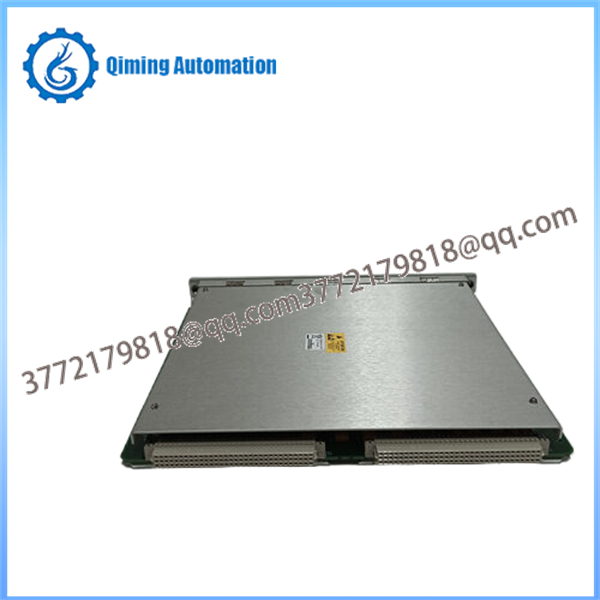
_副本.jpg)
_副本.jpg)
_副本.jpg)
