





The ABB YPC104B (Order Number: YT204001-BT) is a specialized FSK Modem / Communication Interface Module used primarily in legacy ABB industrial control systems, particularly within the Masterpiece 200 (MP200) or Masterpiece 300 (MP300) Distributed Control Systems (DCS), and potentially in older Advent OCS or Freelance architectures.
.jpg)
.jpg)
There are still some products that have not been listed yet. For more information, please contact us. If the product model does not match the displayed picture, the actual model shall prevail. Please consult us for specific product images; We will arrange for the warehouse to take photos for confirmation. We have 76 shared warehouses worldwide, so it may take several hours to accurately respond to your message. We deeply apologize for any inconvenience caused to you. Of course, we will process your inquiry as soon as possible.
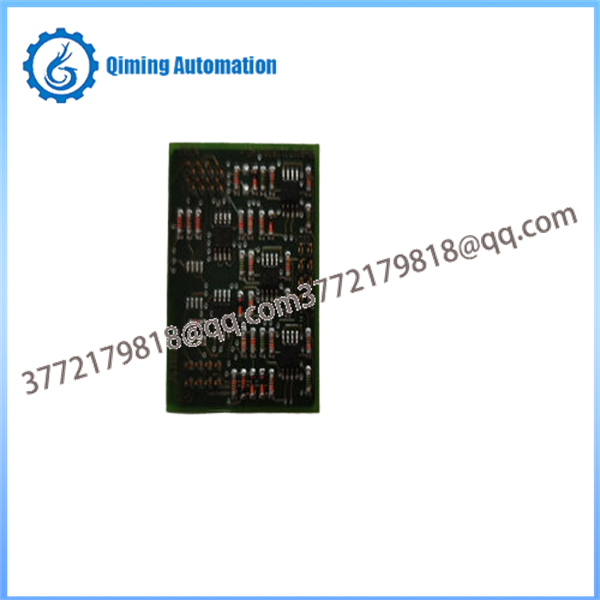
The ABB YPC104B (Order Number: YT204001-BT) is a specialized FSK Modem / Communication Interface Module used primarily in legacy ABB industrial control systems, particularly within the Masterpiece 200 (MP200) or Masterpiece 300 (MP300) Distributed Control Systems (DCS), and potentially in older Advent OCS or Freelance architectures. Unlike a standard temperature transmitter (a common misclassification in some online catalogs), the YPC104B functions as a frequency-shift keying (FSK) modem or a serial communication processor. It facilitates data exchange between the central controller and remote I/O stations, operator interfaces, or external devices over dedicated communication lines or telephone networks. This module is critical for maintaining network integrity and real-time data flow in large-scale process automation plants such as power generation facilities, pulp and paper mills, and chemical processing units.
.jpg "YPC104B YT204001-BT")
Model Designation: YPC104B
Order Number: YT204001-BT (Sometimes listed with suffixes like /1 or /2 indicating hardware revisions).
Application: Communication interface for ABB Masterpiece (MP200/MP300) DCS and legacy control systems.
Function:
FSK Modulation/Demodulation: Converts digital signals to analog frequencies for transmission over voice-grade lines or dedicated cables.
Protocol Handling: Manages proprietary ABB communication protocols for controller-to-I/O or controller-to-controller data exchange.
Signal Conditioning: Isolates and conditions communication signals to prevent noise interference.
Communication Interface: Typically supports RS-232, RS-485, or current loop interfaces depending on the specific backplane configuration.
Transmission Speed: Standard baud rates for legacy industrial modems (e.g., 300 to 2400 bps, potentially up to 9600 bps depending on firmware).
Power Supply: Derived from the system backplane (typically +5V DC, +/-15V DC).
Mounting: Plug-in module designed for specific slots in ABB Masterpiece chassis/racks.
Operating Temperature: Industrial range, typically 0°C to +55°C.
Indicators: LEDs for Power, Transmit (TX), Receive (RX), and Fault/Status.
.jpg "YPC104B YT204001-BT")
Safety Isolation: Ensure the DCS rack power is disconnected or the specific slot is de-energized if hot-swapping is not supported by the specific system configuration.
Slot Identification: Locate the designated communication slot in the Masterpiece chassis as per the system architecture diagram.
ESD Precautions: Wear an anti-static wrist strap. The YPC104B contains sensitive communication circuitry.
Module Insertion: Align the YPC104B connectors with the backplane. Ensure guide rails are engaged to prevent pin damage.
Seating: Push the module firmly until it seats completely. Secure with the retaining screws or locking mechanism.
Cabling: Connect the communication lines (twisted pair, coaxial, or telephone lines) to the front terminal block or DB connector, observing correct polarity and shielding grounding.
Configuration: Set any hardware DIP switches or jumpers on the YPC104B for address, baud rate, or mode selection (if applicable) before powering up.
Power Up: Restore system power. Verify that the "Power" LED illuminates and that "TX/RX" LEDs flash during system initialization.
Once installed, the YPC104B performs:
Data Link Establishment: Initiates and maintains the communication link between the host controller and remote nodes.
Signal Conversion: Modulates outgoing digital data into FSK signals and demodulates incoming analog signals back into digital data.
Error Checking: Performs parity checks and cyclic redundancy checks (CRC) to ensure data integrity.
Traffic Management: Buffers data packets to handle speed mismatches between the controller and the communication line.
Diagnostics: Monitors line quality, signal strength, and connection status, reporting faults to the main CPU.
Correct Identification: Do not confuse YT204001-BT with temperature transmitters. Verify the part number against the system bill of materials (BOM).
Wiring Shielding: Communication lines are susceptible to EMI. Use shielded cables and ground the shield at one end only to prevent ground loops.
Address Conflicts: Ensure the module's hardware address (if set by jumpers) does not conflict with other devices on the same network segment.
Backplane Compatibility: Verify that the YPC104B revision is compatible with the specific Masterpiece chassis and CPU firmware version.
Line Quality: For long-distance connections, verify line impedance and attenuation levels to ensure reliable FSK transmission.
LED Monitoring: Regularly check the status LEDs. Constant "Fault" lights or absence of "TX/RX" activity indicate communication breakdowns.
Connection Inspection: Periodically inspect terminal blocks for loose wires, corrosion, or oxidation, especially in humid environments.
Cleaning: Remove dust from the module and ventilation slots using dry compressed air.
Log Analysis: Review system diagnostic logs for communication errors, timeouts, or retransmission counts associated with the YPC104B.
Spare Strategy: Due to the legacy nature of this module, maintain a tested spare unit to minimize downtime in case of failure.
No Communication: Check power supply to the slot, verify cabling continuity, and ensure the remote device is powered and configured correctly.
High Error Rate: Inspect for EMI sources near the communication cable. Check cable shielding and grounding. Verify baud rate settings match on both ends.
Module Fault LED: Reseat the YPC104B. If the fault persists, the module may have internal component failure (e.g., modem chip).
Intermittent Connection: Look for loose terminals, vibrating connectors, or marginal line quality (noise on the line).
Replacement: When replacing, ensure the new YPC104B is configured with the same hardware settings (jumpers/switches) as the failed unit. System parameters may need to be downloaded if the module stores unique configuration data.
Do you provide global shipping services?
Yes. We have local distribution centers on all continents, which can quickly transport parts to any corner of the world.
2. What payment methods and currencies do you accept?
To make your purchasing process as simple as possible, we offer multiple payment methods including bank transfer, check, and PayPal. Meanwhile, we also accept most mainstream credit and debit cards, such as Visa, Mastercard, and American Express. We can accept payments in most major currencies worldwide, but we recommend using US dollars (USD), British pounds (GBP), or euros (EUR) as a priority. Payments in other currencies may incur additional fees. All transactions are securely processed by HSBC Bank and HSBC Merchant Services.
How many parts do you currently have in stock?
We have a vast inventory of thousands of new, refurbished, and outdated automation components, including products from well-known manufacturers such as ABB and Schneider. If you cannot find the required parts, please do not worry. We work closely with a global network of professional suppliers to provide you with tailored quotes even if the part is not listed on our website.
Who can I contact if I encounter any problems?
Our experienced customer service team will handle any issues after you place your order.


 WhatsApp
 WeChat
Copyright © 2026 Guangzhou Qiming Automation Technology Co., Ltd


 TOP
TOP Home
Home Consult Now
 Back to list
.jpg)
.jpg)
.jpg)
.jpg)
.jpg)
